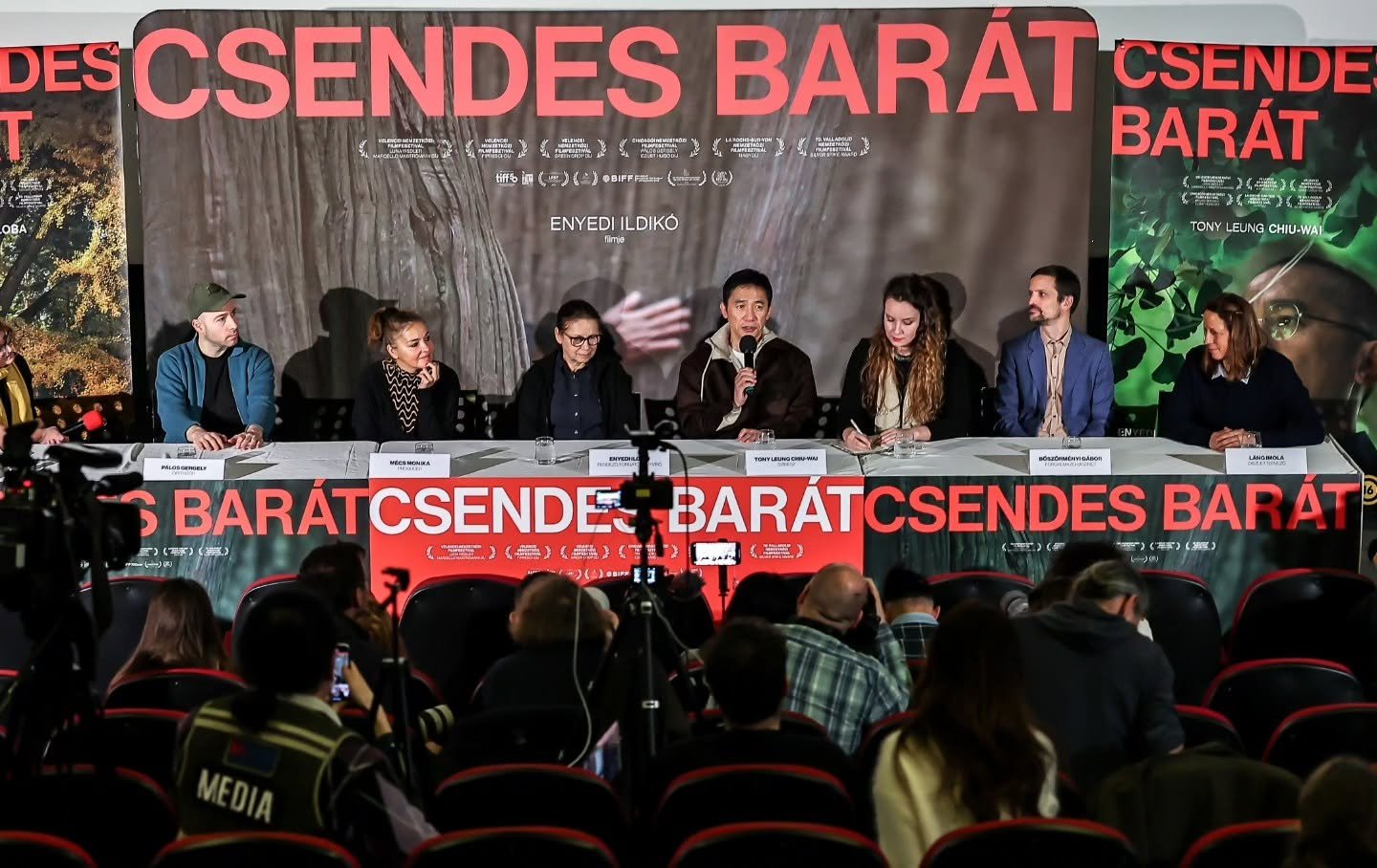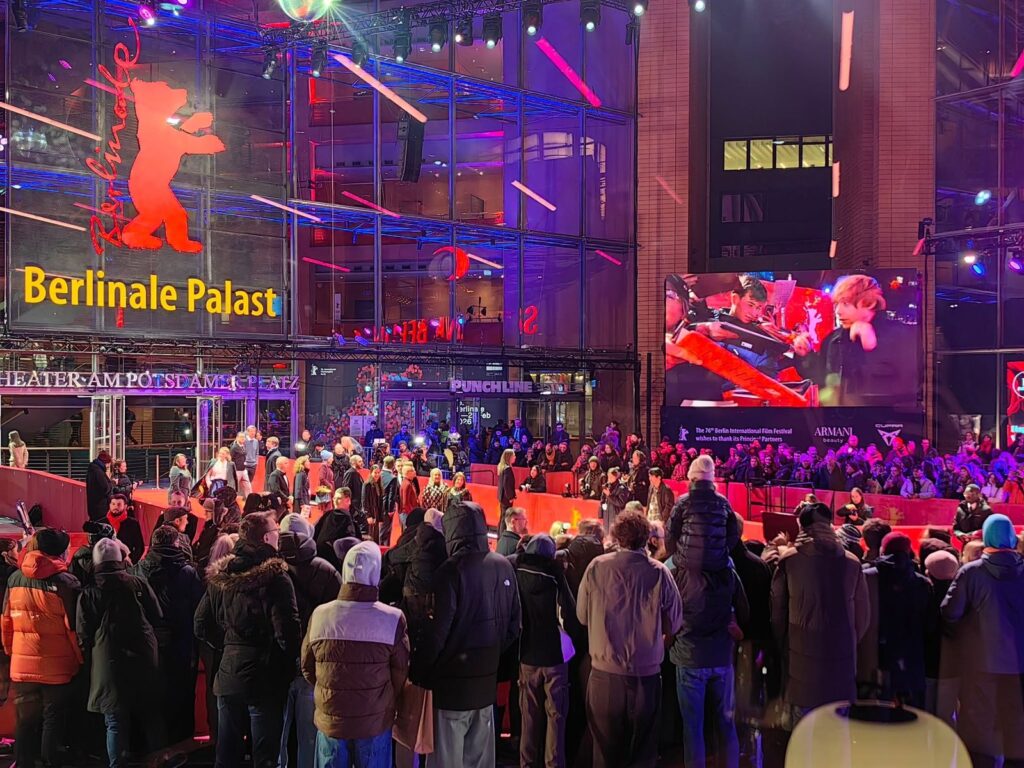
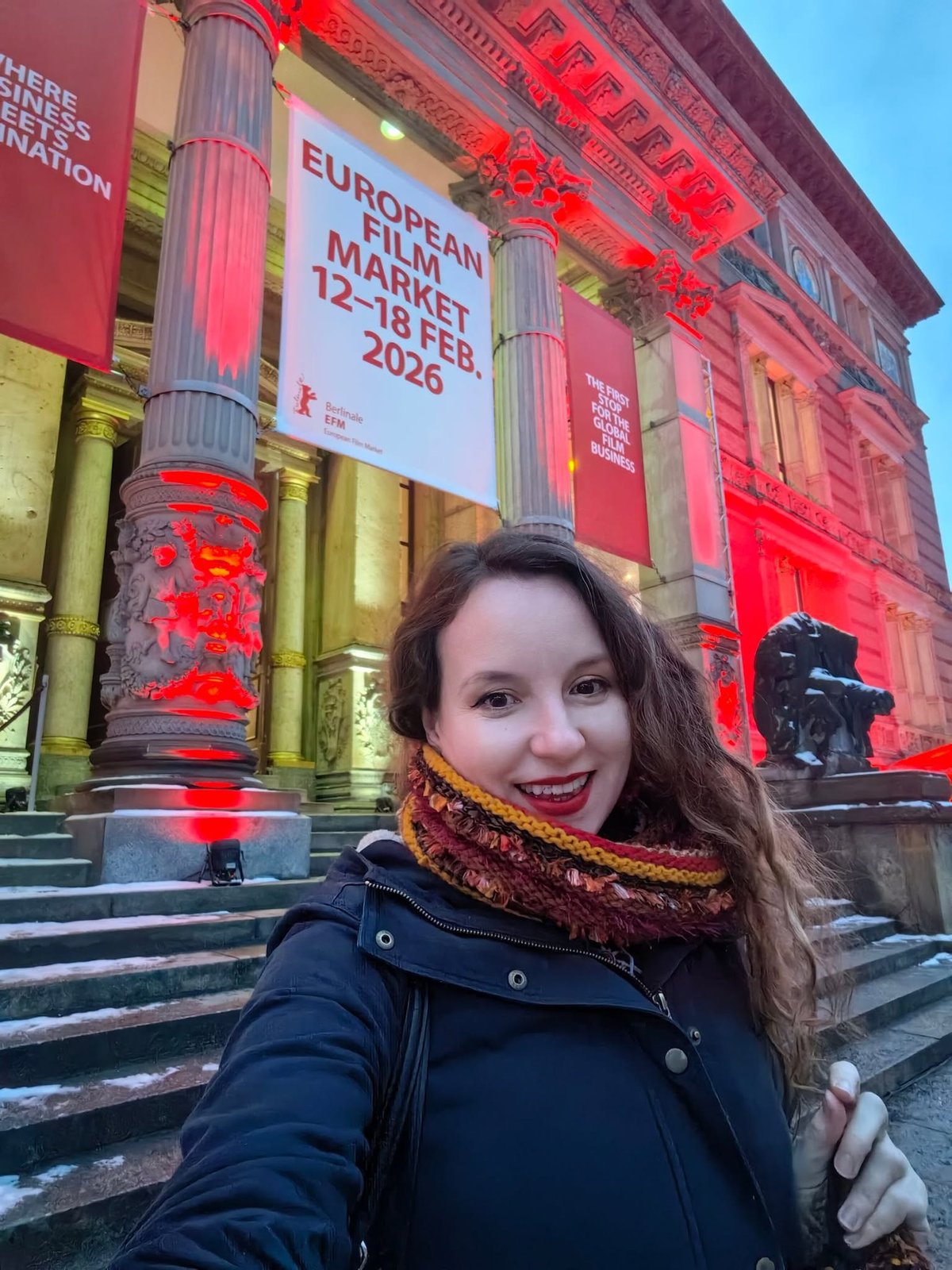
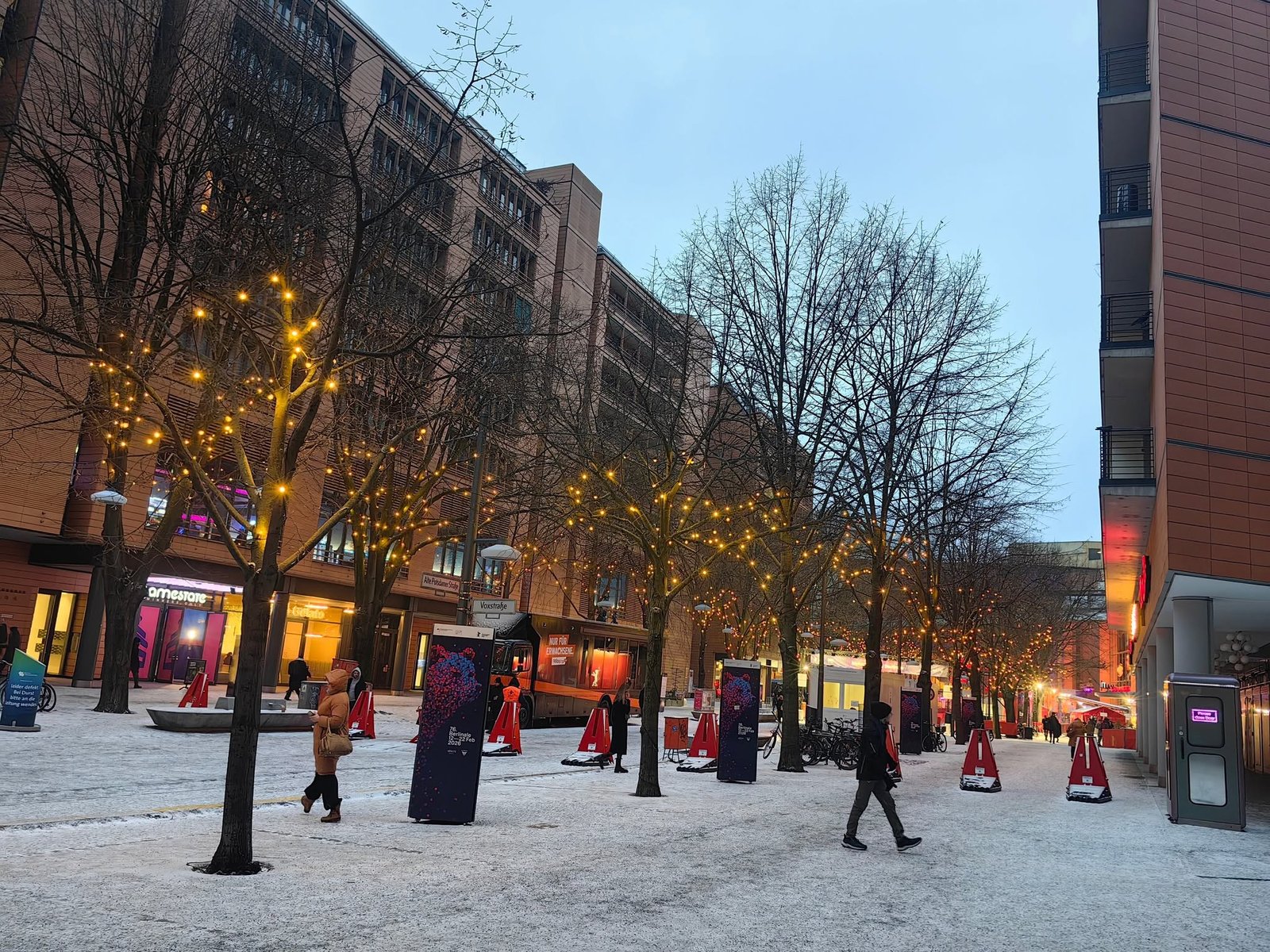
This year got off to a truly exciting start: following Tony Leung’s press conference, we travelled to Berlin to attend the European Film Market (EFM) at the Berlin International Film Festival. The Berlin International Film Festival is one of the most significant film events not only in Europe but also in the world. The European Film Market, which has been running since 1978, is one of the world’s oldest film markets and took place this year between 12 and 18 February. Despite the bitter February weather, the bustling atmosphere, reminiscent of Christmas, that filled Potsdamer Platz and the surrounding area was truly impressive. The surrounding cinemas and event venues hosted the Berlinale’s key events, transforming the district into a veritable film hub for a week.
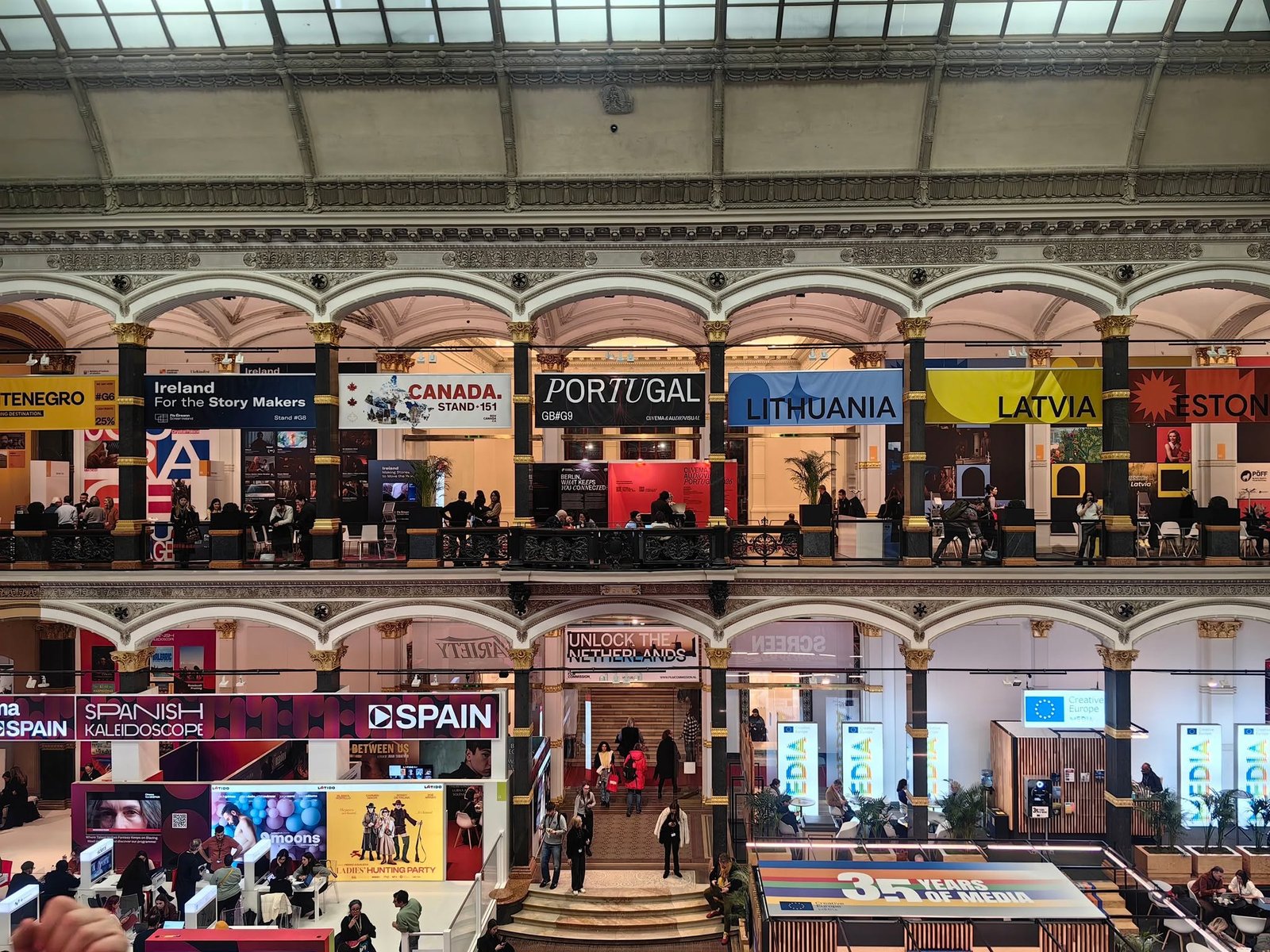
One of the most significant venues for us was the Gropius Bau, which served as the market’s main building. Although the interior seemed almost impossibly crowded at first, from the second day onwards it became increasingly easy to find our way around. Imagine a real market where, amongst other things, films can be „bought and sold” at the various stalls. For our part, this was primarily a place for discussions, networking and brief consultations. We also had the opportunity to meet in person, for example, with representatives of the company from whom we acquired the screening rights for *Nezha 2* last year. After so many email exchanges, it was a great pleasure to have a coffee together.
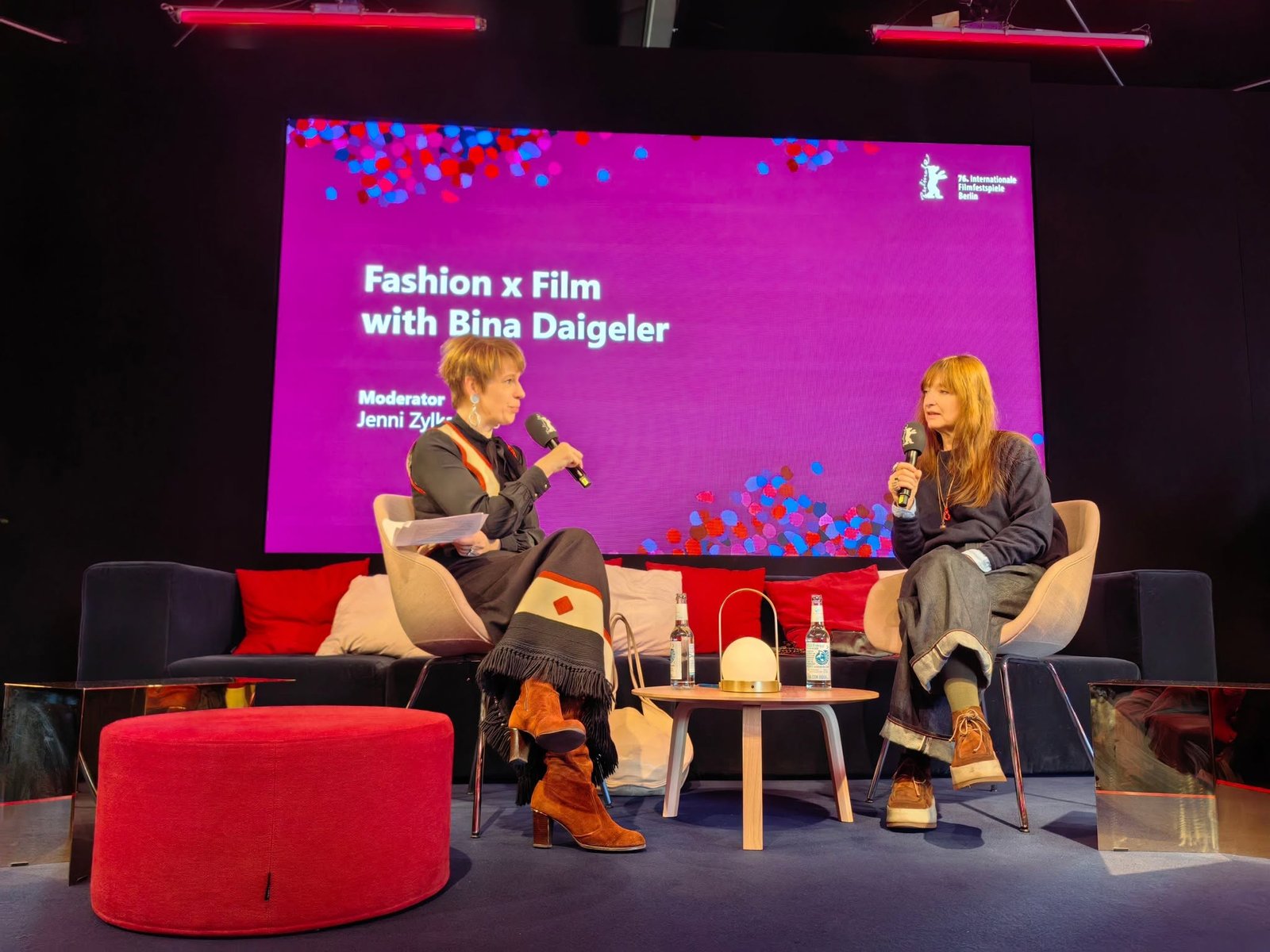
We also spent a lot of time at the Berlinale Hub, which was a temporary structure situated right next to the red carpet. From there, not only could we watch the parade of stars from what was practically a front-row seat, but we also had the chance to strike up conversations with interesting people, and it was here that we took part in what was, for us, the highlight of the festival: a professional discussion with Oscar-winning Bina Daigeler.
Among other things, the lady from Munich has Back (2006), Manifesto (2015), and one of this year’s Berlinale competition entries, the Rosebud Pruning c. designed the costumes for the film (2026), but the Oscar in 2020 went to the Mulan c. for her costume design for a live-action film. She spoke about the challenges they faced in ensuring that the costumes were not only beautiful but also authentic. To this end, they carried out extensive research in both Europe and China in order to gain as thorough an understanding as possible of Chinese culture.
Speaking of Chinese culture, it’s certainly worth mentioning that we met the main organisers of the Far East Film Festival, which has been held in Italy for 28 years now. It’s amazing to think that, right from the start, they’ve been screening 70–80 films a year. Naturally, the main topic we discussed with them was their festival and Imázsia. I must say that we face very similar challenges, even though these two events are organised in completely different ways. For example, subtitling archive films seems to be far from straightforward anywhere.
As well as the face-to-face meetings, we were of course treated to many unforgettable cinematic experiences, and it was a special occasion to celebrate the Chinese Lunar New Year in Berlin this year. Although, precisely because of the timing, most Chinese film exhibitors and visitors stayed at home, we’ll probably be back next year!
(Photos: All images are my own)